by tracy.fevertree@gmail.com | Jun 23, 2020 | Places
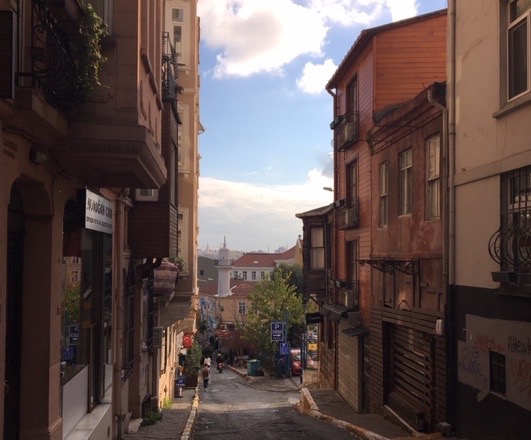
The past few days have finally started to feel normal, or at least what the new normal is going to look like . We went for a walk, just my husband and I and we spent an hour strolling through the streets of Nisantasi. A whole hour of walking with no purpose, other than enjoying the sunshine.
For the past two and a half months, all outings had a goal: get groceries, get home supplies, get basic necessities – and do it all at warp speed. Added to this was the mask, gloves, and glasses, which all had to be present and correct, before even opening the front door. Now things are different and in the most positive and hopeful way.
We are still wearing masks but it somehow feels less ominous, because we are also wearing summer clothes and the urgent edginess of curfew has gone. The atmosphere in the streets, is different too. Less of that feeling of dashing out in the middle of an apocalypse and more of the simple joy of dawdling along and watching people go by. It feels exceptionally good to be doing ordinary things.
We found a coffee shop on wheels at the entrance to Macka Park and got iced mochas. Sitting on a park bench and seeing people smile with their eyes felt good, even if it was just a tentative feeling of hope that the ordinariness of our lives will return again. It won’t be the old normal, but it will be OK.
ALINA

by tracy.fevertree@gmail.com | Jun 1, 2020 | Places
Istanbul has been under partial lockdown for over two months. Weekly two to four day curfews followed by a few days of relatively busy streets, with people hurrying to stock up on groceries before the next curfew. Citizens aged over 65 years and under 20 years old, were not allowed to leave their homes at all initially, but recently the restrictions were eased to allow these age groups to go out for a few hours on specified days. With June 1 being the official date for reopening the economy, businesses are preparing to begin the new normal. We took a short walk in Istanbul’s historic Tesvikiye neighbourhood, which is part of the Nisantasi quarter. It has always been famous for people watching, with trendy cafes and cocktails bars but lockdown hasn’t changed its character, although it is slightly more sedate right now. Things will definitely be a little different for awhile still, but it was good to see everyone out and following the guidelines. Istanbul has yet to see what the future holds but it is encouraging to know that we have taken the next step, with a renewed awareness of looking out for each other. It was even good to see this Sisli seagull ,back outside his favourite butchery, looking slightly indignant if not a little pleased with himself.

by tracy.fevertree@gmail.com | May 18, 2020 | Places
In Istanbul, spring arrives slowly and summer starts abruptly. The rain continues throughout the beginning of spring, so while many travel blogs and guides, recommend trips on the Bosphorus at this time of year, it could be a chilly ride without a water proof jacket.
There are apparently three species of dolphin, which make their way up towards the Black Sea, towards the end of April. Despite travelling on ferries and walking along the shore at Yenikoy, I have never seen them (but then I am not particularly lucky with wildlife generally). This year, the shipping activity has decreased on the Bosphorus and luckily, the dolphins are easy to spot. I can now safely say that there really are dolphins in the Bosphorus and even I have seen them this year.
In normal times, Istanbul’s parks are magnificent during spring time, but will be just as much fun to visit in early summer, as the COVID-19 restrictions are eased. Yildiz Park in Besitkas/Ortokoy has an old palace as well as a view of the Bosphorus. I have never visited Ulus Park, but am guessing that the views must be amazing. Emirgan Park is my personal favourite. It has lots of steep hills, but there are also great places to stop and catch your breath, with the excuse of admiring the view or the bridal parties having their photos taken. The main restaurant is in a lovely old building and there are some ruins scattered about too. Of course, spring is the time for Istanbul’s famous Tulip Festival (but not in 2020 unfortunately).
The parks of Istanbul are great for picnics, with water fountains (for filling up tea kettles) and plenty of seating areas. Even if you aren’t picnicking yourself, seeing Turkish families picnic is fascinating. They bring more food and equipment than I would pack for a week long camping trip and frankly, make every one else’s picnics look a bit boring. As with anywhere in Turkey, there are kiosks serving food, in case you suddenly find yourself feeling madly jealous of other peoples’ picnic spreads.
Although neither is easy to reach with public transport, if you are able to drive, then Belgrad forest is always worth a visit or you could go for a walk and a picnic at Polonezkoy (the Polish Village).
Once, the pandemic has passed, I am hoping to take a public ferry across the Bosphorus to the Asian side to see Andalous Kavagi . The castle ruins are not as intact or impressive as those of Rumeli Hisari , on the European shore, but I am thinking that having fresh fish for lunch could easily make up for any missing bits of the original castle.
The Princes Islands are nice to visit at this time of year, before the heat and the crowds arrive. The public ferry will be less frequent but cycling around the island with a rented bike will definitely be easier in the spring weather.
Spring in Istanbul, might be slightly wetter than expected, but this means that climbing hills and stairs is more fun than it would be in the summer heat. Spring is always a great time of year for exploring and enjoying being outdoors. Making the most of being outdoors and walking around unfamiliar neighbourhoods hasn’t been possible this year, but seeing the blossoms and the dolphins made it great anyway.
by tracy.fevertree@gmail.com | Apr 30, 2020 | Places
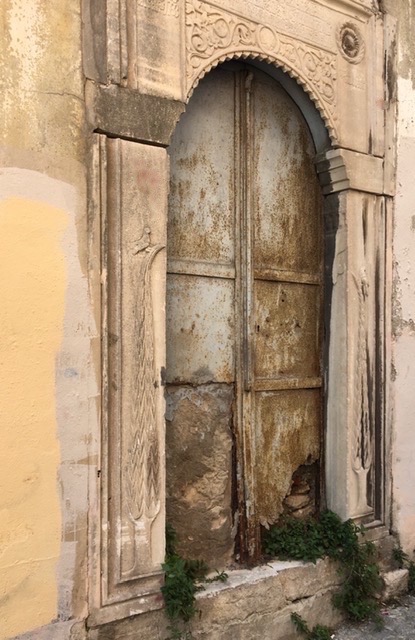
Istanbul has some interesting looking doors along its oldest streets and it is amazing to think that people have been living behind those same doors for centuries. Each generation has stepped out into the street each day, witnessed history and then gone back inside their homes and continued with daily life. Istanbul has grand monuments, but along its forgotten neighbourhood streets are also plenty of reminders of ordinary people, who walked, shopped and held their families close, throughout whatever invasion, calamity or victory was busy shaping the city’s destiny during their lifetimes.
Istanbul is quieter in 2020, than any of us could ever have imagined. As the city shuts down to deal with COVID-19, even the traffic, we all once complained about, has stopped. At first, I found myself longing for a return to “normality” (with slightly less traffic) but now, I am not sure what normal might be for any of us after experiencing the silence, the economic worries and changes to our routines. In the first days, my mind was racing back and forth trying to gather information about the virus, in the hope that there might be a solution that would allow us to reset the clock. After far too much scary scrolling, I focussed instead on trying to arrange everything so that we can all live, work and study at home. There were days that life was complete chaos and the children missed their beloved grandparents and school friends. Luckily, there have also been some easier days. Now, we are adjusting to our new way of life and although home schooling is maybe not so successful for our family, we are trying to make up for it by baking and tidying out cupboards. We try not to worry too much about the future, although we know this threat will linger just beyond our front door, for many more weeks.
Anandhati Roy wrote an article for the Financial Times (3 April 2020) in which she says that “Historically, pandemics have forced humans to break with the past and imagine their world anew. This one is no different. It is a portal, a gateway between one world and the next. We can choose to walk through it, dragging the carcasses of our prejudice and hatred, our avarice, our data banks and dead ideas, our dead rivers and smoky skies behind us. Or we can walk through lightly, with little luggage, ready to imagine another world. And ready to fight for it.”
I like the idea of emerging through a “portal”, with a light step and less luggage. It is very apt for this time when we are all having to shut the doors to our homes to keep everyone safe. I am waiting for the day when I can open my own front door and step out onto the street, knowing that the city is out of danger. Part of the strangeness of living in Istanbul right now, is the fact that it is possible to walk straight along the sidewalks. I miss weaving my way around the simit carts, fruit sellers’ baskets, badly parked cars, lost tourists and street cats.
by tracy.fevertree@gmail.com | Mar 10, 2020 | Places
Istanbul is often described as magical because of its history and scenery. It is also magical in more ordinary ways, especially when disappointments turn into pleasant surprises. The bad tempered taxi driver uncomplainingly carries heavy luggage up the stairs, the harassed check-out lady gives enthusiastic directions and the ferry passengers stop arguing to laugh at the greedy seagulls.
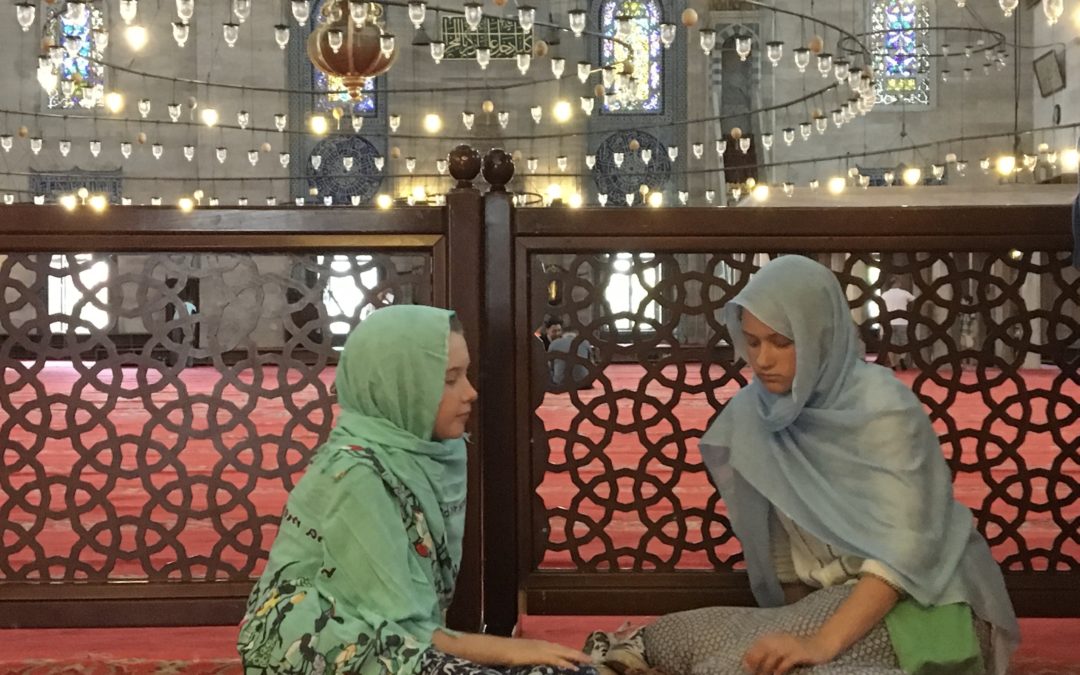
I took my visiting friends to the Blue Mosque on a hot August to find that the dome was still under renovation and it was prayer time. Since the mosque was closed, we opted to go to the Grand Bazaar instead. We meandered through the bazaar and exited into a street where all the shops seemed to be selling buttons. Thankfully, I remembered that the Süleymaniye Mosque was nearby and after walking throught the streets behind Istanbul University, we were soon standing above the Bosphorus. We were hot and tired, but pleased that we had ended up at Istanbul’s fourth imperial mosque. There are around 3000 mosques in the city, but this one is special because it was commissioned by Sultan Süleyman I (known as ‘the Magnificent’) and designed by Mimar Sinan, the famous architect who began work on its construction in 1550.
As I said, Istanbul has lots of surprises. One of these is that visiting children seem to like mosques. Maybe it is the awe inspiring interiorsor perhaps it has something to do with the atmosphere, but the children contentedly sat themselves down on the floor and listened to the volunteer guide who explained aspects of the architecture and answered questions about the Islamic faith. The volunteer guides, were a nice surprise too. Most are students, who are fluent in foreign languages and very happy to share their knowledge of history.
I had never noticed this before, but mosque chandeliers sometimes contain ostrich eggs! There were originally 300 ostrich eggs in the Süleymaniye Mosque but only around 30 remain. The guide explained that the eggs are thought to prevent spiders from spinning webs along the chandeliers. I wondered if the ostrich eggs were decorative and the guide was trying to keep the children interested, but it turns out that this really is the case and that ostrich eggs emit an odour, which repels insects. Another surprise!